
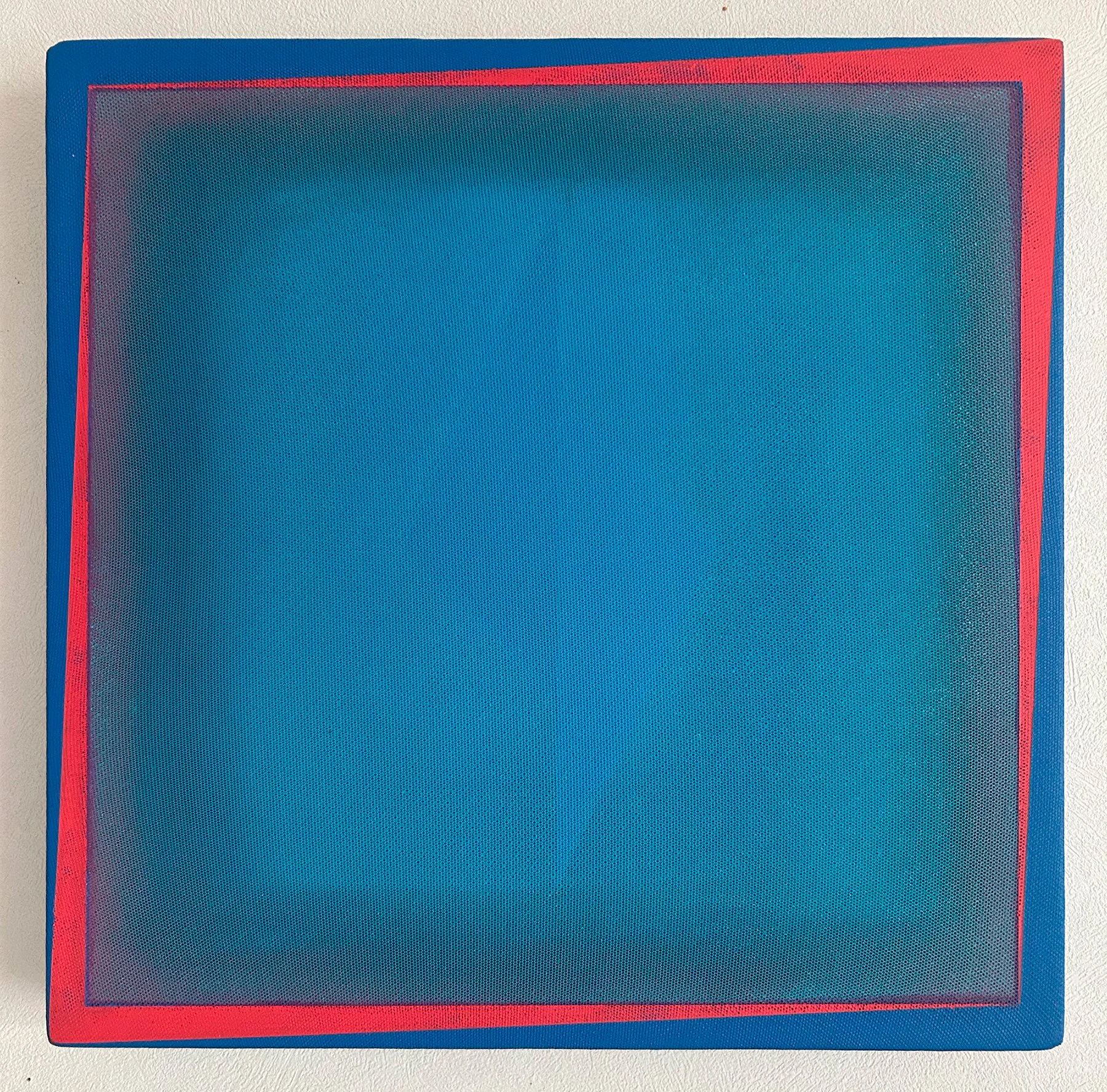
Mantis 22 (Summer 2024)
Disillusion; Dissolution
Chen Poyu
名聲的考證
關於名聲的神經痛不時發作。
當雨刷晃過視野,當毛球卡入外套拉鍊。
痛苦的形狀像一棵遭到雷殛的樹。
然後在檢討人際關係之外他開始思考名聲。
「名聲是一隻蜜蜂。」艾蜜莉.狄金生的句子。
想得太多對雙方都沒有好處。
幸運的絲線就像電話線這種古老的發明很可惜是會燒斷的。
蜜蜂透過八字形的舞蹈將訊息轉知其他成員。
關於有花粉的花,水源,新巢址的位置方向與距離。
倒楣遵守固定的原則而他亦步亦趨。可惡,拉鍊又卡住了。
「名聲是易變質的食物。」還是艾蜜莉.狄金生。
狄金生小姐您到底有多在意名聲。
思考一事往往能將注意力移往他處。
就像隱喻的行進。
就像累累的葡萄日日豐碩。
就像酒神的花環如果你感興趣。
僅僅十首詩在生前得以出版。
狄金生小姐用絲線將寫在各種紙片上的詩作縫成厚厚的書稿。
一千八百多首,她獨特的筆跡像某種傾斜的舞蹈。
傾斜的押韻與隱喻;還有許多美麗的押花。
有趣的事實:蜂蜜其實不算是易變質的食物。
但他得留意葡萄是否結霜。
所有的電話亭都在一步之遙。
先確定了神經痛是不需要看醫生的那種。
就欣賞痛苦雷殛的樹背景的晚霞。
那顏色是黑紅與淺黃。
願意的五月
淺綠,窗玻璃因為樹淺綠
細小,鳥因為窗玻璃細小
願意的五月,趴在很好的寫字桌
信紙上蓋上光與窗花的浮水印
打開窗,演奏鋼琴打開琴蓋
室內外通風時鳥也可以演唱《詩人之戀》
你的手捏著筆,捏著詩
詩捏著戀愛。願意的五月把信捏成樂團
寫字桌上淺綠的立扇
(曖昧,句子因為窗花曖昧)
紙隨著它浮起來、落下來
你細小地流著汗。戀愛是枚很好的浮水印
在淺綠細小的曖昧中
有一隻小鳥告知了不回答的六月
Meditation on Fame
From time to time, the neuralgic pain about fame returns.
When the rain distorts vision, when fuzz balls snag a jacket zip.
The pain is shaped like a lightning-struck tree.
After rethinking interpersonal relationships, he deliberates on fame.
Fame is a bee, wrote Emily Dickinson.
Overthinking doesn’t bring anyone any good.
Lucky strings will sadly be burnt like other old inventions, such as the
telephone cords.
The bees perform a waggle dance to exchange information with each other.
About pollinated flowers, waterhead, sites of new hives and how far they are.
Down on his luck, he follows the rules at every step. Damn, the zip jams again
Again, Dickinson wrote, Fame is a fickle food.
How much does she indeed care about fame.
Thinking helps him distract himself.
Like a metaphor coming forward.
Like a colony of grapes growing plumper each day.
Like a wreath that crowns Dionysus, if you will.
A mere ten poems were published in her lifetime.
Dickinson handsewed paper scraps of poems into a hefty manuscript with strings.
1,800 poems and more. Her peculiar handwriting, a dance that slants.
Slant rhymes and metaphors, charming pressed flowers.
Funny thing is, honey isn’t exactly a fickle food.
And the grapes, he has to check if they survive the frost.
All telephone booths are within a stone’s throw.
But let’s make sure the neuralgic pain requires no medical opinion first.
Then watch the sunset glow behind the tree bruised by lightning.
Its dark crimson, its yellow bleached.
Translated by Nicolas Wong
May is the Month for Willingness
Pale green, a glass window goes pale green because of the trees
Small, a bird goes small because of the window
May is the month for willingness. It leans over a refined writing desk
The letter sheet is stamped with a watermark of light and window grilles
Open the window, open the piano’s lid before the playing begins
Fresh air comes in. The bird is chirping A Poet’s Love
You are holding a pen, a poem
And the poem holds love. The willing May turns the letter into a symphony
On the writing desk, a pale green fan stands
(Ambiguous, sentences ambiguate because of the window grilles)
A sheet of paper floats and sinks with the moving air
Your sweat drips in small beads. Love makes a refined watermark
In small pale green ambiguities
A bird has spoken to the unanswering June
Translated by Nicolas Wong
Born in 1993, CHEN POYU has won numerous literary prizes in Taiwan, including the Lin Rong San Poetry Award and China Times Literary Award. He is the author of The Bubbles Maker (essays), and two poetry collections, mini me, and recently, The Art of Rivalry. His Chinese translation of Robert Hass’ Summer Snow was published in 2022. He currently lives in Taipei. IG: @lukepoyudchen
NICHOLAS WONG is a poet, translator and visual artist from Hong Kong. He is the author of Crevasse, winner of the Lambda 256 Contributors Literary Awards in Gay Poetry, and Besiege Me, also a Lammy finalist in the same category. His poems and translations are forthcoming in The Georgia Review, Epiphany, fourteen poems, The Massachusetts Review, and The Griffith Review. IG: citiesofsameness.